As I’m flipping through my sketchbook and mourning the end
of summer, I’m reflecting on all that I learned about urban sketching this
season. I especially wanted to share some tricks I picked up at the annual sketch seminar. In case you missed it,
here’s a recap of the class I taught "Capturing Figures in Motion."
 |
| To warm up we took our sketchbooks to the curb and immediately learned two things... |
1. Figures are
frustrating.
2. Moving figures are super frustrating.
So what’s the trick?
Well, there’s not just one, but a BIG one that might make all the
difference is having an open mind. I’m
used to long commutes and having a good 20 minutes to make a decent drawing, but
when you’re sketching from the sidewalk, you’d be lucky to get a 20 second
glance of a passerby. You have to change
your expectations. It’s a different way of sketching, but no less
impressive.
 |
| 20 minute sketch |
 |
| 20 second sketch |
Find a busy street and set yourself a goal like,
“Today I’ll draw motion for half an hour.”
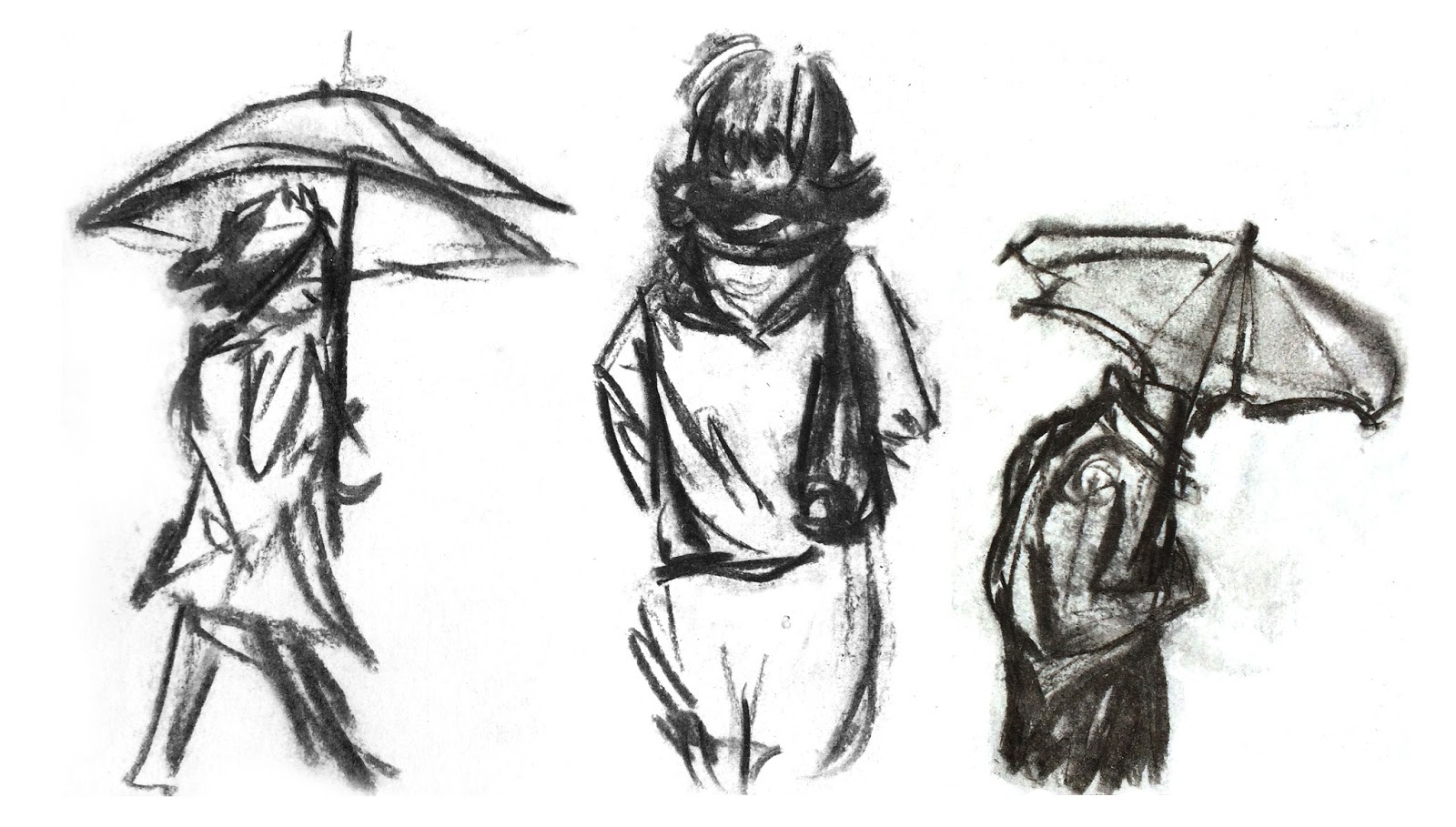
I encouraged everyone at the seminar to grab a stick of vine charcoal.
It’s really messy and takes some getting used to, but it forces you to stay
loose and let go of the details.

Don’t work in your absolute favorite sketchbook. Instead of trying to get a post perfect picture, just try to fill a quota: ten pages of blobby human shapes. Draw as many people as you can, as fast as you can. Fill up every inch! (Don't forget to have a can of fixative and spray each page before turning!)


The results may not be readable to anyone other than
yourself, but you’ll start to build some muscle memory of how people move, where
their weight shifts, how a pair of pants hangs etc. When you look back at your book you’ll have
all of these wonderfully expressive reference pages to enrich your urban settings.
Were you sketching a crosswalk and only got down half a woman? Fill in the gaps by looking at some scribbles you have in your gesture library.

Think about it like an athlete; warm up sketching, or gesture drawing, is awkward at first and can be embarrassing. There's no doubt it's a lot of hard work! But keep at it and before you know it you'll have trained your brain to rapidly record motion. When you do get a decent motion sketch, you should be really proud of yourself and post it everywhere! You recorded all that information in a matter of seconds… That’s pretty amazing!