Pages

Showing posts with label painting. Show all posts

Tuesday, October 27, 2015

How Urban Sketching and Plein Air Painting Compare and Contrast

TUESDAY TIPS & TRICKS, by Ted Gordon


How are the Urban Sketchers and Plein Air Painting movements related?

As an artist with a hand in both and with our upcoming combined show, the Urban Sketchers Chicago Holiday Showcase, with Featured Guests, Plein Air Painters of Chicago 11/21-12/13/2015, let’s examine similarities and differences.


HISTORY
Technology had something to do with the formation of both. Plein Air means "in the open air" or simply, “outdoors.” The technological advance of paint in tubes allowed artists in the mid 1800s to explore nature and capture the effects of sunlight in the moment. Urban Sketchers is about drawing on location, in a supportive, global community. The internet was key to its formation and is integral to the global sharing aspect.


Plein Air: Elephant Vigil at Showmen's Rest, A Plein Air painting in a limited palette of Richeson casein
SIMILARITIES
Both groups create images on location, in the moment.
With some exceptions, the size of our drawings and paintings tend to be small, for reasons of both portability and time.
We travel with our materials. Watermedia (watercolor, gouache, and casein) and digital tools are used in either. Of all of these, watercolor is the most popular crossover medium in my experience.
We’re both interested in capturing the Truth of a place and time, exploring the world around us.


Fountain of the Muses, Rio De Janeiro, in Winsor & Newton watercolor
DIFFERENCES
There are exceptions to all of these items, however, in general, the differences tend to be about time and materials. Plein Air Painting tends to take much more time per image and is painted with paint or pastels. Urban Sketches can be created in much less time and may use any material.


Urban Sketches tend to be even smaller than a typical plein air painting. When you consider that an Urban Sketch might be drawn on a pocket-sized sketchbook while waiting in line, as opposed to being created on an easel set up for several hours, you can understand why.


Urban Sketches, without question, can also be drawn indoors. Cafes, museums, and concert venues are all typical Urban Sketchers venues. Exceptions prove how similar these efforts are. In both Plein Air Painting and Urban Sketchers, the world is our studio.


Based in its journalistic roots, Urban Sketchers aims to tell the story of our surroundings. Urban Sketches are far more likely to contain text within the work than in a Plein Air painting.
The story of a Plein Air painting can be much less literally narrative. For instance, the story could be about what the sunlight is doing during your painting or how intensely blue that boat is.


Plein Air is almost always done on an easel. Urban Sketching sometimes is, but often isn’t, for mobility and quickness.


While Plein Air paintings are made with paint or pastels, Urban Sketchers draw with any kind of media and wildly individual styles. Plein Air styles, while they can be quite varied, aren’t as divergent as the Urban Sketchers styles can be, in my opinion.


Urban Sketchers tends to be more casual, mobile, and quick. Urban Sketchers’ subjects are more likely to have a person or an action as the subject. In contrast, plein air paintings often take much more time to complete and are more likely to contain natural environmental or architectural subjects.


Plein Air painters are more likely to edit an environment for aesthetic purposes. A tree might move or wires might be omitted without feeling that the truth of the place had been compromised in plein air.


Lindberg Park, painted in Winsor & Newton watercolor on location. Are these Plein Air or Urban Sketches? Yes!

CONCLUSION
In conclusion, I think that some of the differences are superficial, while others are very strong. Which you are doing at a given time may have more to do with your equipment and intention than anything else. There are definitely times when the lines are blurred. To be clear, I don't make a value judgement between the two and there's no reason you can't do each in the same day.
For artists that like to experiment, I encourage you to try both!


You can see more of my work, Urban Sketches and Plein Air Paintings here:

What do you think? In what other ways are Urban Sketchers and Plein Air Painting similar or different?

Tuesday, October 28, 2014

Graded Wash in Watercolor

Tuesday Tips and Tricks

Watercolor is a great tool for urban sketching.  In this post, I will show you a technique I use frequently in both urban sketching and my professional work.

Watercolor is a delicate media and can be frustrating to work with if you do not have some basic steps to work with.  Graded washes are a helpful skill to know when wanting to capture light, shade and shadow.  In nature, light rarely hits a surface as a flat tone.  Factors such as the orientation of the subject, the context of the subject and the direction from which the light is coming from all impact how light appears on the subject. 

Here is a step by step process for creating a smooth, graded wash with watercolor, followed by a few practical applications for graded washes:

Creating the Graded Wash:


1)
Hold your sketchbook or paper at an angle to allow the watercolor to flow down the paper.  About a 35 degree angle works well for me.  If the angle is too high, the water will drip too fast for you to control.  If the angle is too low, the paint will not move fast enough, could cause unwanted buckling of the paper and will not allow for a smooth wash.

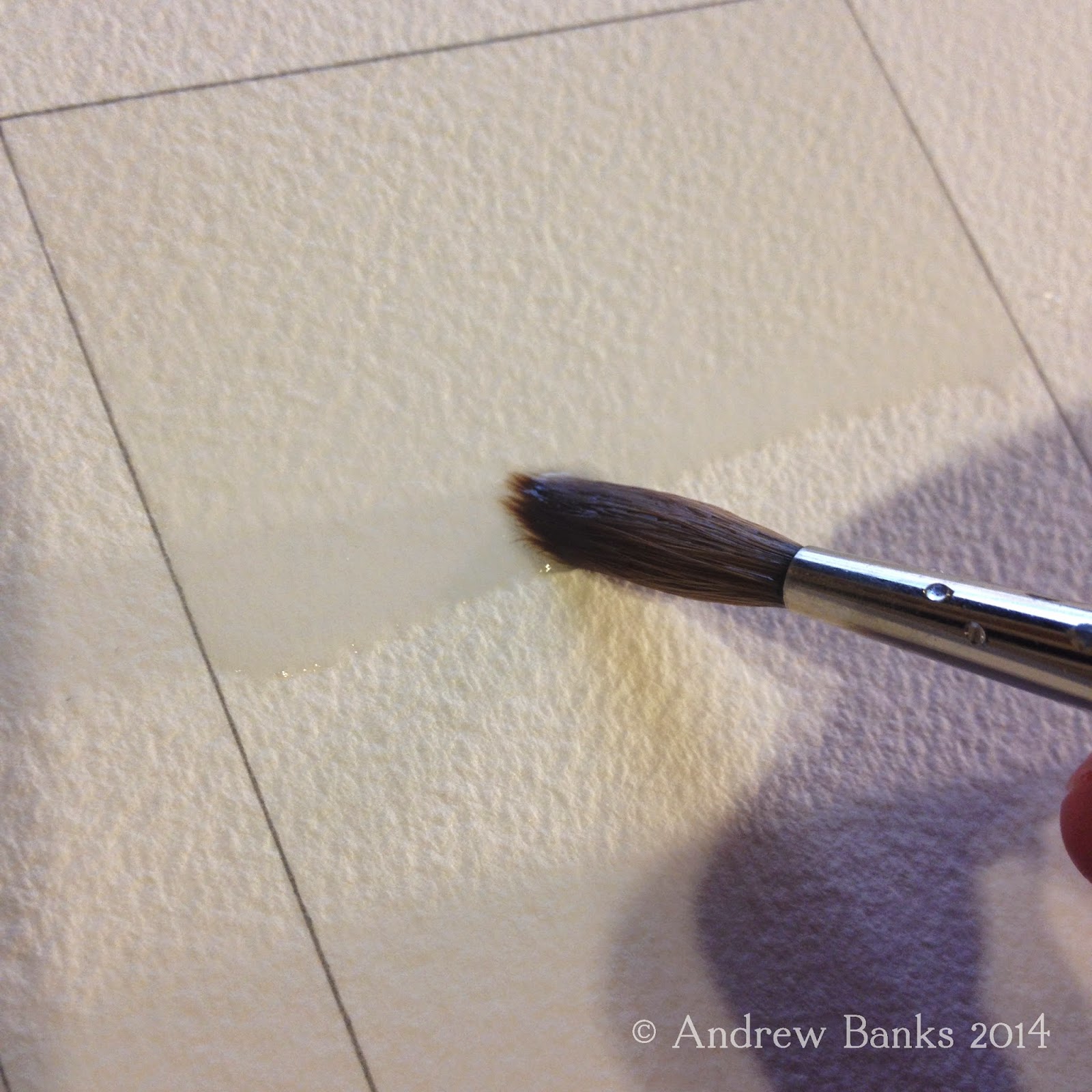
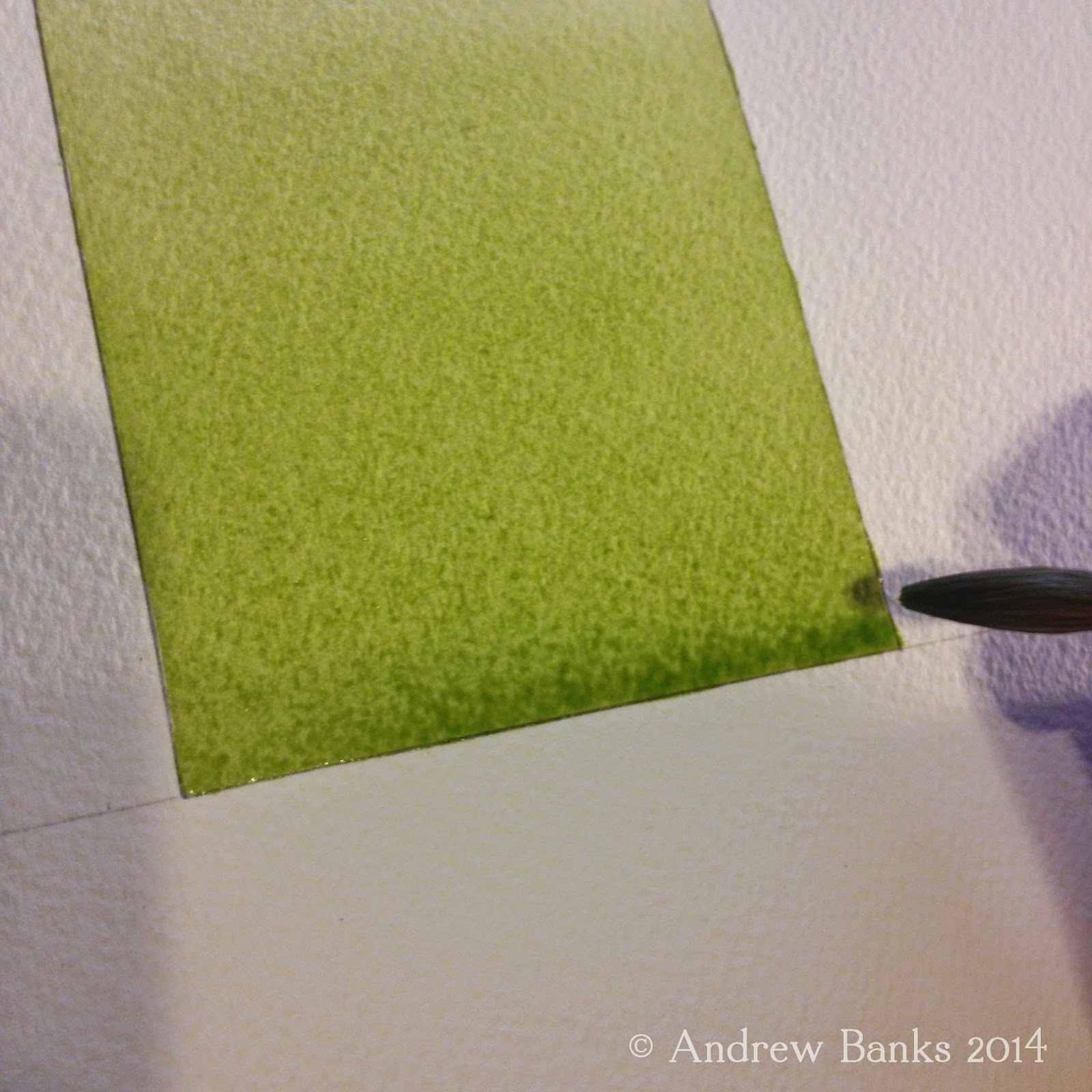
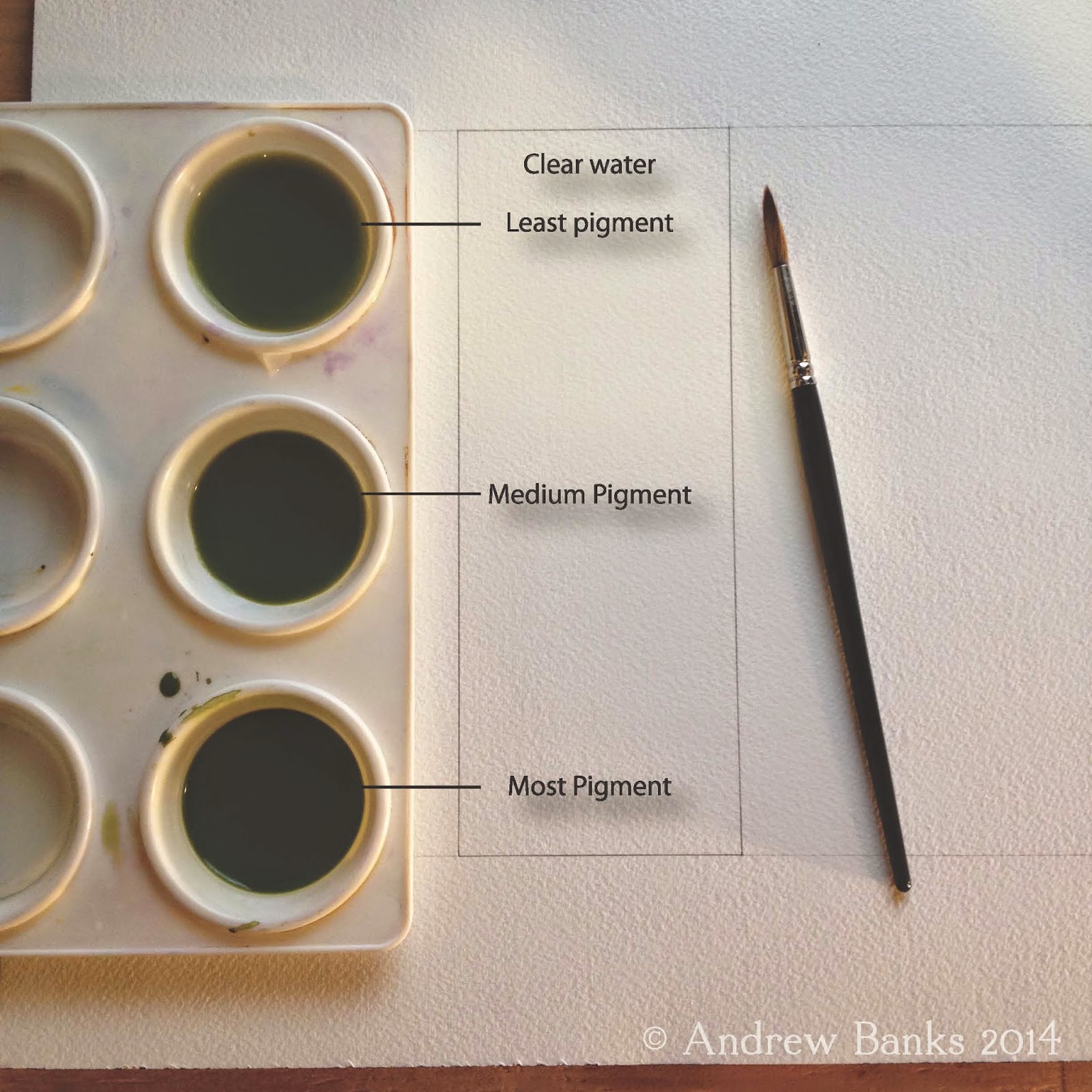
2) Load brush with completely clear water.  Apply clear wash to paper, creating a bead, allowing the water to gather slightly.  (If your angle is just right, the water will stay where you guide it.)  Make sure there is an even amount of water in all parts of the bead.


3)
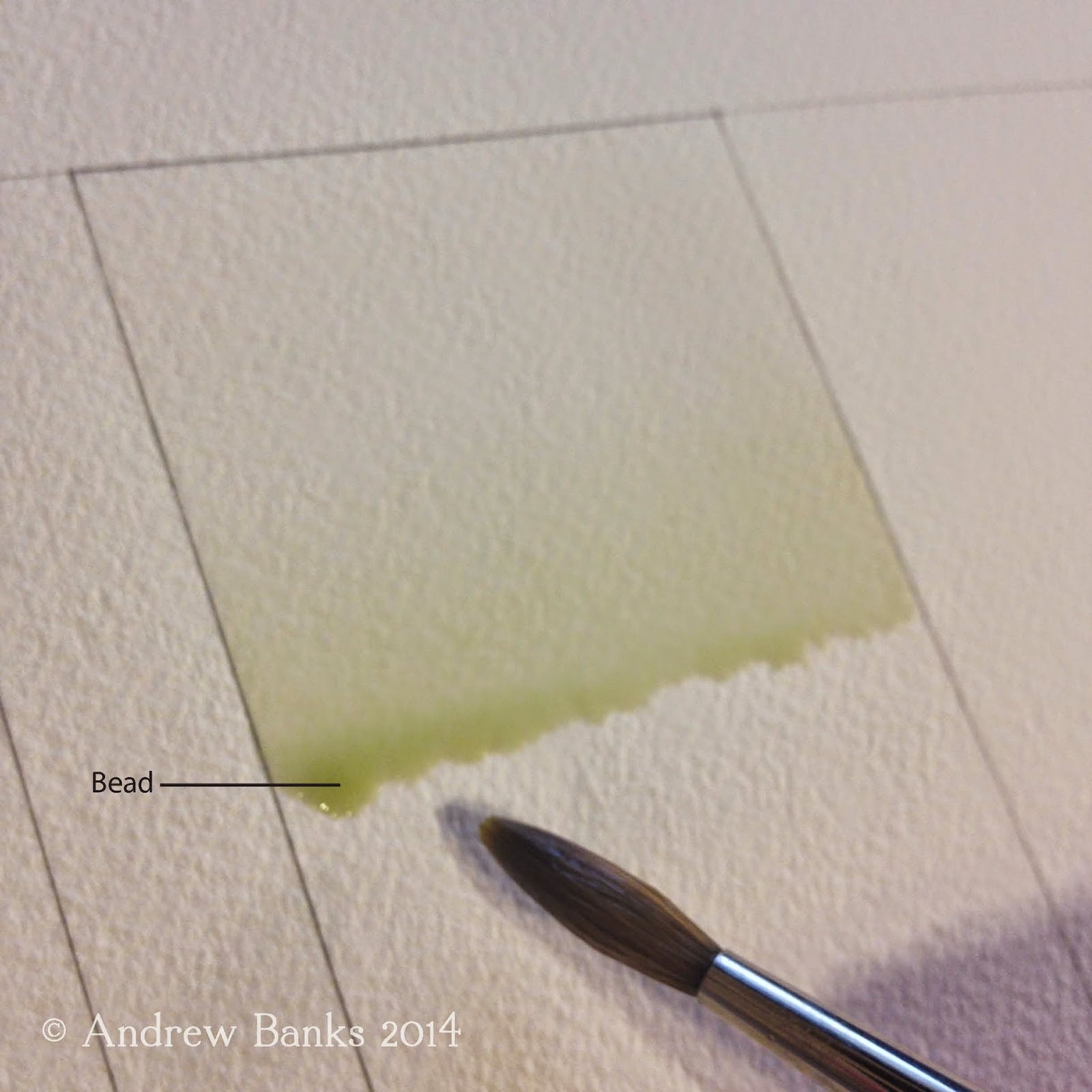
  Load your brush with a highly diluted watercolor wash and introduce it into the clear wash before it has time to soak into the paper and dry.  With downward brush strokes, pull the bead of paint down the page.  You will begin to see the pigment from your brush get pulled into the clear wash.


4)
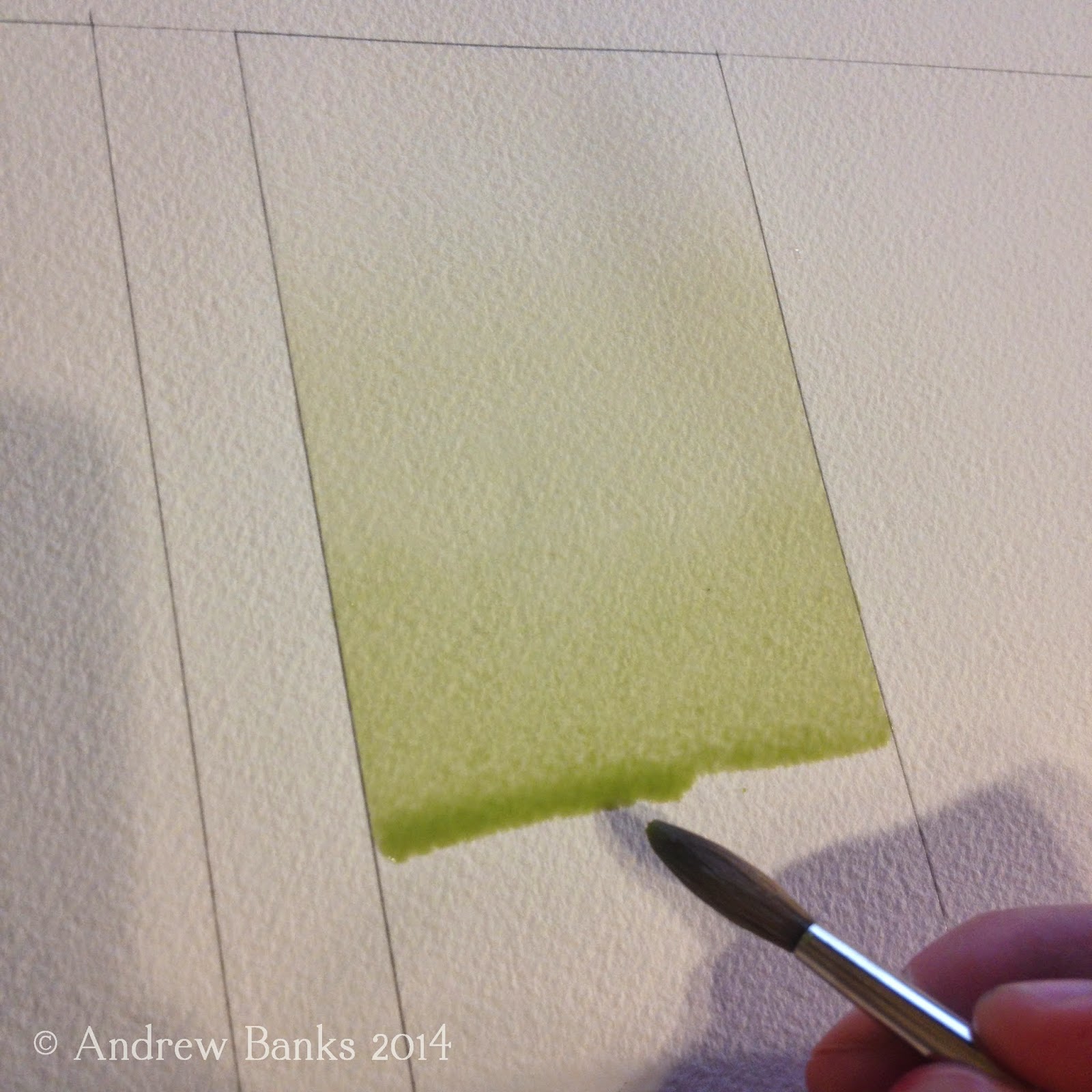
Load your brush with a slightly more pigmented wash and introduce it into your bead, continuing to pull it down the page.  (Work on doing this quickly.  If you allow the bead to dry, you will be left with a line of color that will interrupt the graded wash).


5)
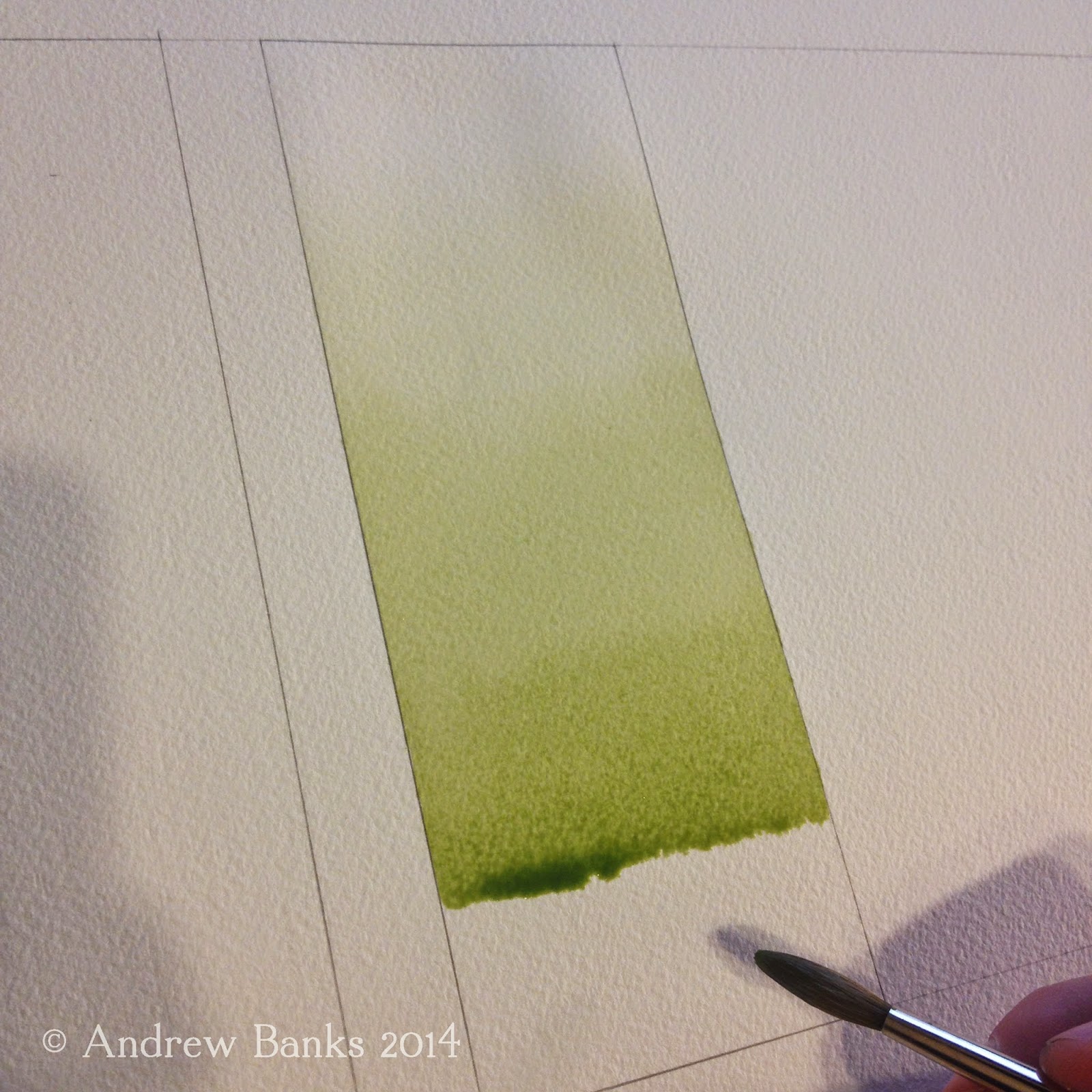
Load your brush with the highest pigmented wash and continue to pull the bead downward.


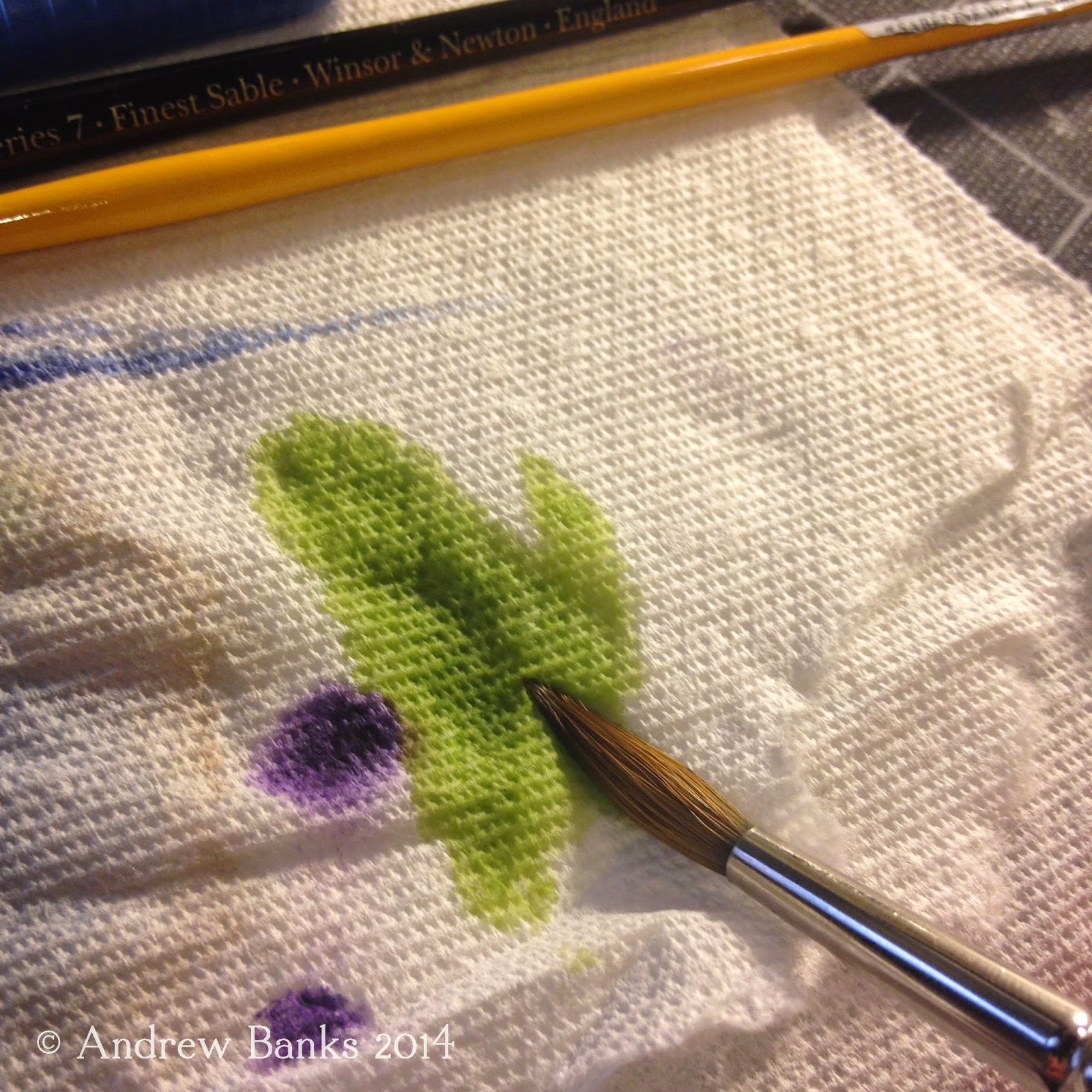
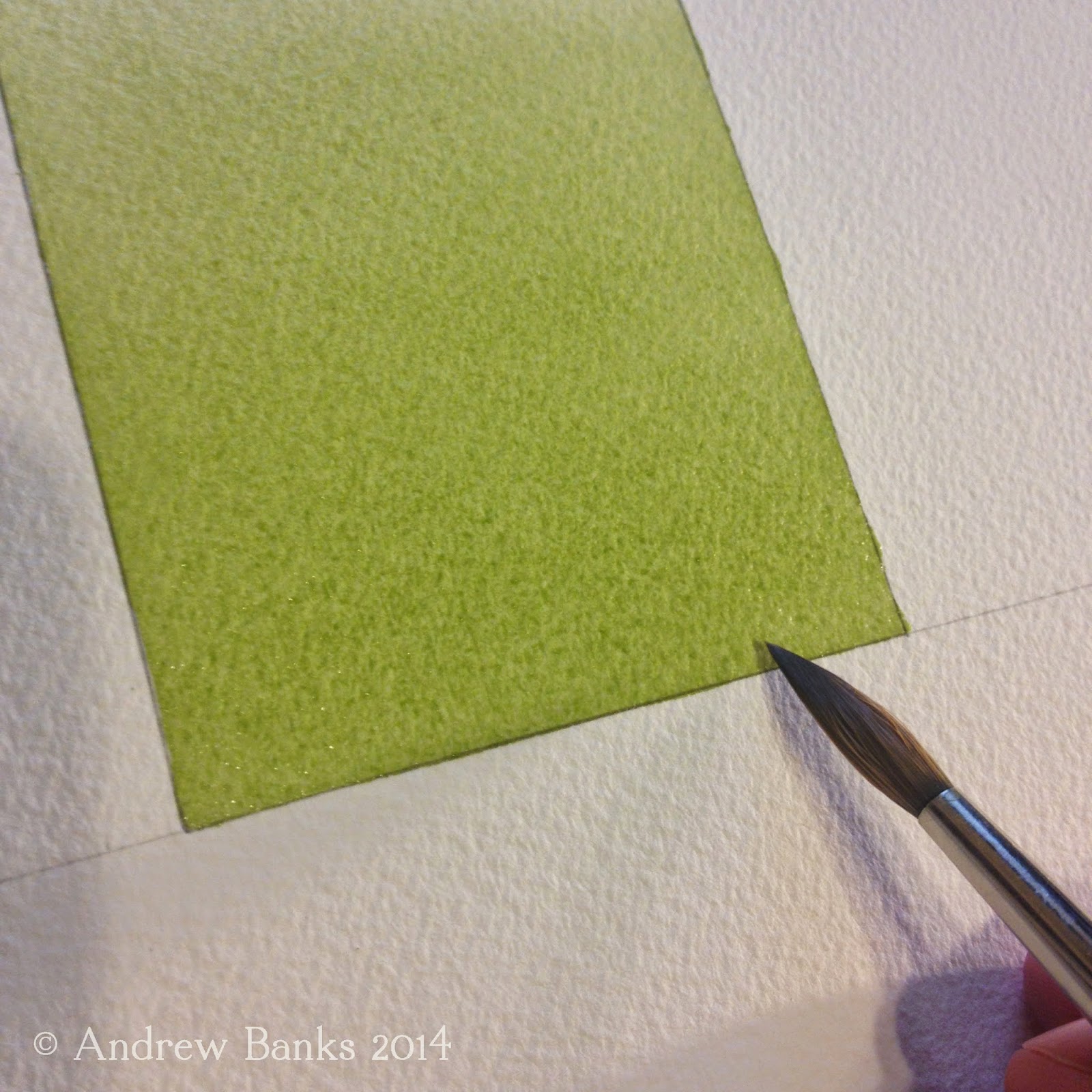
6) Bring your bead to your desired edge or location.  Shake the brush off of or touch the brush to a paper towel to absorb the excess water.  Gently touch your dry brush to the bead.  Your brush will absorb the excess water back into the brush, leaving an even surface of paint on the paper.  If we left the bead of water on the paper, the excess paint would diffuse back up into the earlier wash and would create an unwanted stain.


7) Repeat steps 2-6 until you get the values you want.

Graded Wash Applications:
Here are just a few examples of applications for graded washes

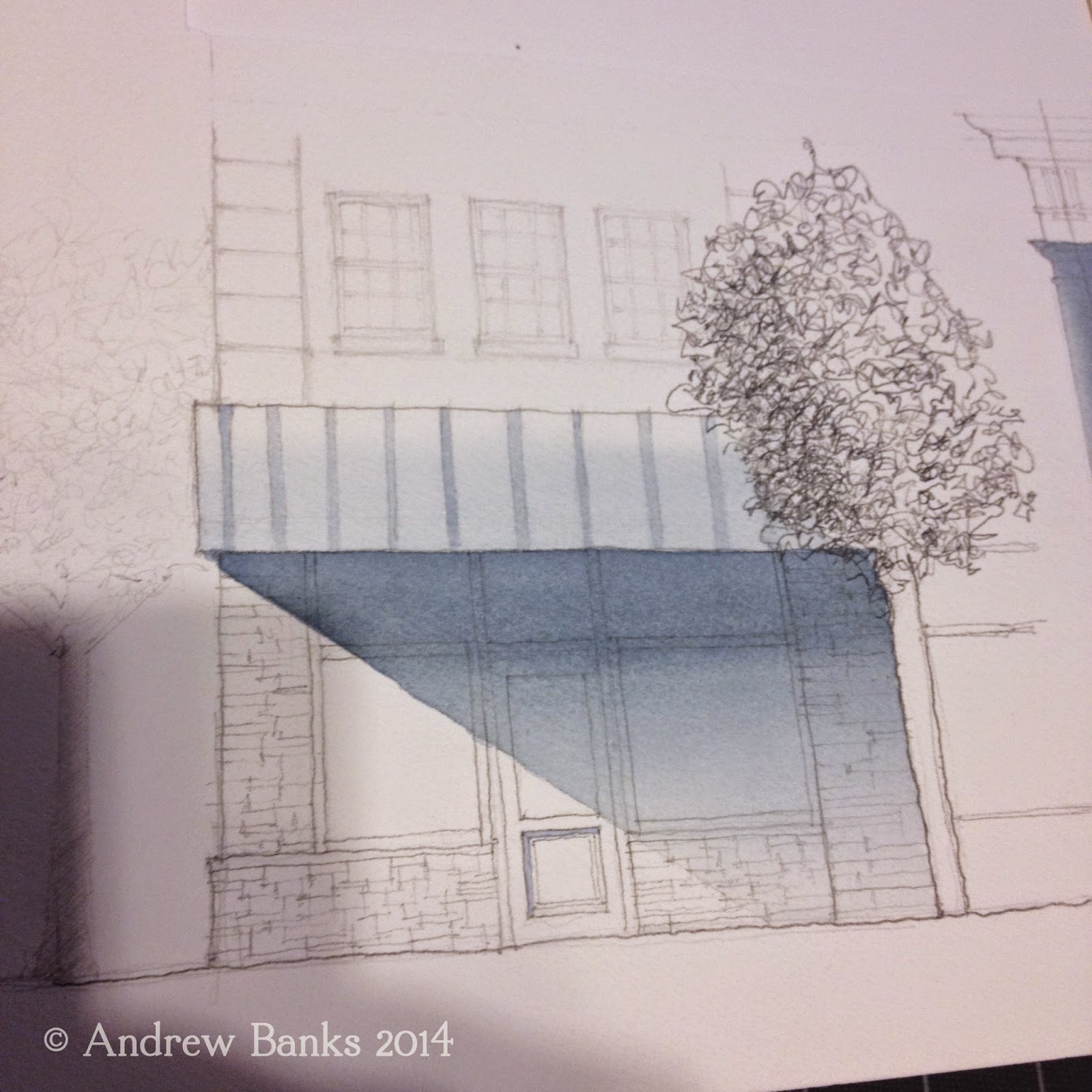
Shadows
Here, the graded wash works perfectly for a shadow cast on the underside of an awning.  On a sunny day, light will reflect off of the ground surface back on the building wall.  The graded wash allows you to show this reflected light gradually darkening as it gets farther from the ground and up under the awning.


Curved objects
Curved objects have a range of tones (highlight, mid tone, shadow, reflected light, cast shadow) that can be achieved with graded wash.

Skies
Depending on where the sun is in the sky, the sky will have a graded wash.  For example when the sun is low on the horizon, the graded wash will be light on the horizon line and darker the higher you go into the sky.  When the sun is higher in the sky it is generally the opposite.

Tuesday, February 12, 2013

Sketching can be therapeutic

Sketching can be therapeutic. Losing a pet can certainly be a major bummer but I discovered that being able to sketch out my thoughts and feelings has helped me work through the sadness and move me towards healing and celebration of my life with my first dog. This is a sketch I did of my first dog, Tucker, a Jack Russell Terrier, who impressed me as a very smart breed of canine who exhibited some very human personality traits. After 13 years, we had to put Tucker down this past summer due to his age and health complications. While it's nothing new to have a pet owner go on and on about how great their pet is or was, I am suggesting that if you are sad or hurting or need to think things through, turn to your pencil, marker, paint brush and just start moving it around. At first, everything you draw will be garbage. That's ok because your mind is filled with confusion and garbage too. But in the same way that mixing paint can be a trial and error process, so too can sketching to work through life's difficult issues and the results can be marvelous.

Sketching, for me, is one of my best friends.