Pages

Showing posts with label #USkChicago #Urbansketchers #T&TThursday. Show all posts

Thursday, March 24, 2022

T&T Thursday


USk Chicago is thrilled to announce that we'll be having a seminar in July! All the details will be posted on the Seminar Blog and the highlights will be posted on this blog.

This is a a recap of an article I wrote several years ago but the information is still on the mark as we begin to think about taking classes again.


Are You Ready?!

How about you? Are you ready for a workshop? Whether it’s an online class, a local workshop, one that involves travel or even if you’re working you way through a self-study book there are certain things that will help you get the most out the experience. Over the years I’ve given workshops and taken many classes both on-site and online.  I’ve found my mindset is the most important factor in what I take away from the class.


  • SET A GOAL – Why am I taking this class? What do I hope to learn?


  • KEEP AN OPEN MIND – Pay attention and follow directions. It’s easy to fall into the attitudes of “that isn’t the way I do it” or “that isn’t the way so-and-so does it” but leave those notions behind at least for the duration of the workshop.


  • THINK PROCESS NOT PRODUCT  (I know, I say that all the time) –  It takes practice to learn new techniques and methods.


  • ASK QUESTIONS – Your instructor wants you get the most out of your time in the class.

Remember, whether your a novice or a working pro, there is another thing you need for a successful workshop experience, that’s a positive and open workshop-state-of-mind.

What's your "must have" for a successful workshop experience?


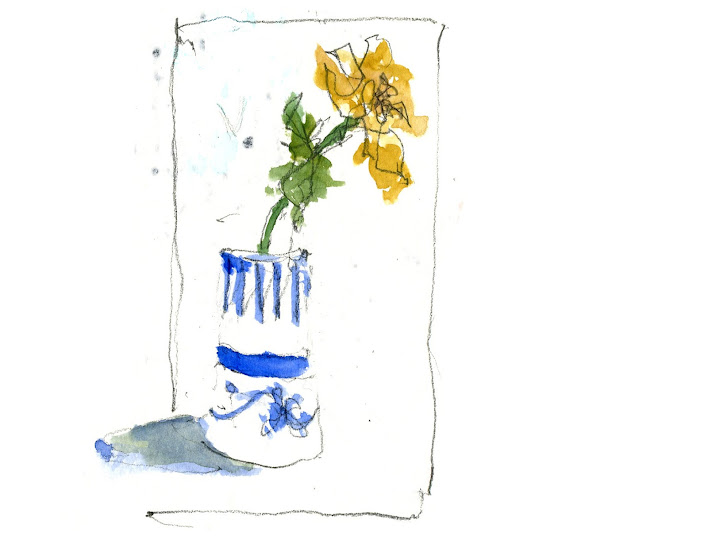
The opening image is an assignment from a class I took from Lewis Rossignol.


Links

David Becker 

Veronica Lawlor

Sketchbook Skool


Thursday, March 10, 2022

T&T Thursday!

 Back to the Future


We're almost there! 

Slowly but surely things are heading back to normal – whatever that is or was! Usk Chicago is resuming in person sketch meets in April. We've also begun planning for a mini seminar in July! Keeping our fingers crossed!


Sketching Habits During Covid

I've been hearing from sketchers how their sketching habits changed during the pandemic. 

  • Some have used daily sketching as a relief. 
  • Still others have kept sketching with the weekly USk Chicago prompts on Facebook.

  • There are those who have used the time to experiment adding new mediums to their repertoire. 
  • Others have almost stopped sketching entirely.


Ready, Set, Sketch!


Where ever you on the sketching grid it's good to review the benefits of a regular/daily sketching habit. Get ready to get together and sketch.

If you have fallen out of the sketching habit pick the same time each day to sketch (ex: before breakfast, while watching TV, during your coffee break, etc.)


Doing even a quick or small sketch each day can reap great benefits.
  • Your work improves.
  • Like an athlete it gets easier with practice as muscle memory improves.
  • Your personal style will develop.

Looking forward to sketching together in the near future!


Want to keep up to date by email? Fill in your email address in the place provided in the upper right corner under the banner. We look forward to hearing from you.

Thursday, February 24, 2022

T&T Thursday!

 Do You See What I See?


Warning: I’m back on my noticing kick. This time it’s a slightly different take than last September's post.


So many times when I start an urban sketch it seems like I go on autopilot. People tend to be my go to focus. For others it’s the architecture, others it’s the straight on view. All are good, but sometimes it’s good to change it up a little.


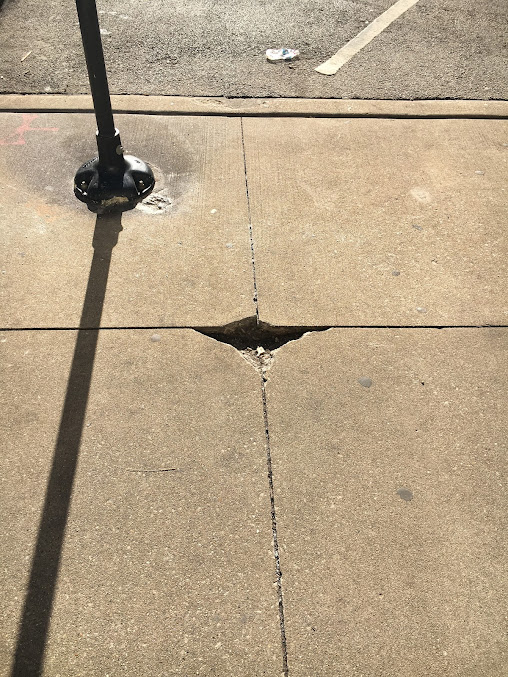
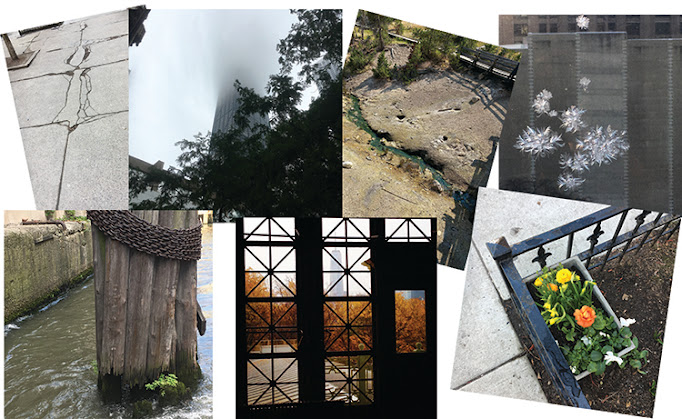
Following Rob Walker’s lead in The Art of Noticing, I started taking photos of things that catch my attention as I walk along the street and on vacation. Going through some images that I’ve taken over the the last year or two I was surprised by how different they are compared to what I see when I sketch.


Here’s the Trick


What I see on site with my photographer’s eye can I sketch it with my hand? 


That’s my challenge!

  • What catches my eye?
  • What jumps out at me?
  • Sketch that with just enough context to make it an urban sketch


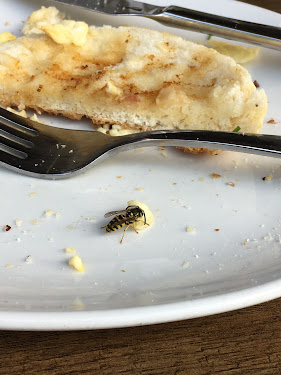
Even if the bee would stay long enough to be sketched, this needs more context to be an urban sketch!


Join me! 
When you go out to sketch, what catches your eye? Sketch that!


Want to keep up to date by email? Fill in your email address in the place provided in the upper right corner under the banner. We look forward to hearing from you.


Thursday, February 10, 2022

T&T Thursday!

Ode to the Pencil


What's the point?  

Pencils have a long and successful history beginning over 5000 years ago in the hands of the Egyptians. Today, they are still in use by school children, carpenters, artists, craftsmen. Pencils can be found in almost any home or office. 


Why?

They are convenient, inexpensive, and come in a wide variety of types and designs. For sketchers who draw whenever they get the chance it's a perfect tool! Rain or shine, hot or freezing temperatures, they get the work done. If you're sitting down, standing up, or leaning against a wall they work!


What's Your Preference?


There are many kinds of pencils:

  • Charcoal
  • Carbon
  • Colored
  • Grease
  • Watercolor
  • Graphite 


Graphite pencils Are the most common. They come in degrees of hardness. The harder the lead the lighter the line.

  • H 9-2 = hard
  • HB = medium
  • B-3 = soft
  • 4B - 9B = very soft

When it comes to sketching the artist's hand still has a great deal of control of the line weight.

Graphite pencils are my favorite. I love the feel of the pencil on the paper as I draw. I even enjoy the quiet sound as it moves across the page.


A piece of paper, a pencil, and a little plastic sharpener (if you're using a mechanical pencil you don't even need that) and you're good to sketch anywhere.

 Nice and simple, that works for me!


Want to keep up to date by email? Fill in your email address in the place provided in the upper right corner under the banner. We look forward to hearing from you.

Thursday, January 13, 2022

T&T Thursday!

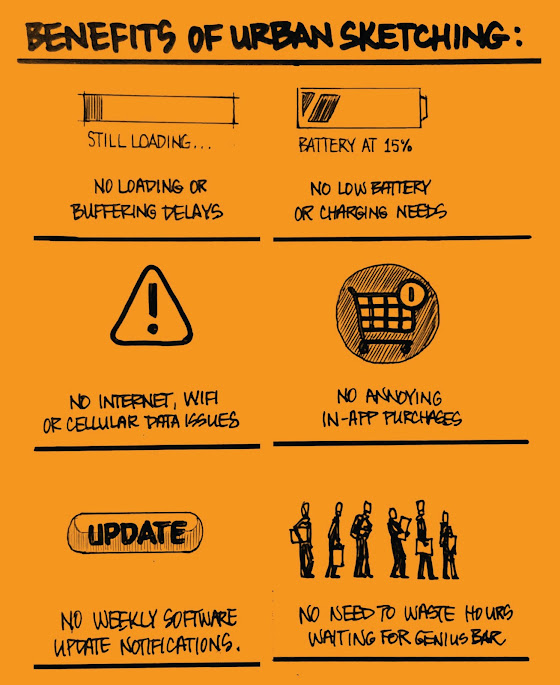
Technology Is Great...  Until It Isn't 

By Wes Douglas


We are all very fortunate to have technology in our lives, especially those portable computers that fit in our backpacks, purses, and pockets. Whenever we get stumped on the name of that actor in that movie from 1962, or we want to show you an important photo to help move our story along, we pull out that phone or tablet and look it up (or ask our device to look it up for us). Want to pull up a soundtrack to go along with that great mood you are in? Just search a artist or genre and that little computer will do the curating for you. Sometimes we need our portable computers to help us feel good about connecting to friends, family and even work colleagues.


But other times,

technology can be a lonely place. 


There are these little built-in roadblocks that make technology so–well let’s just say that technology at that point is not our friend. Right when you are in the middle of a movie you are hooked on, or a video call, a warning pops up that you’re almost out of battery power. Or that if you want to continue, you will need to update your subscription or upgrade to a newer version of your device. Aaaarrrggghhh!


And sometimes you’ll find that you have spent hours scrolling your device to see what other people are up to and, much like scanning tv channels, you find that there is nothing interesting. And with all that time invested, what do you really have to show for it?


Well, my friends, that’s when you should remember your quiet pal the sketchbook. 


It never runs out of battery power or has trouble connecting to the WIFI. You don’t have to constantly purchase new apps or upgrade your version software. And there are no cords and plugs to deal with…I know, I’ve already checked. 


Ever so often you may have to replace your pen with a new one because you used up all the ink. And more frequently, you may be lured to the art store to see if you are missing out on the latest in analog art supplies. If you drop your sketchbook in a puddle, it may be a little soggy but nothing is lost for good (you may need a hairdryer to help you save your book). But none of that really prevents you from continuing on your current sketch journey.


And here is the best part: 


You can spend seconds, hours, days or even years getting lost in your drawings and what you have to show for all that time invested are filled pages of sketches that represent your observations, your experiments, your mistakes, your successful sketches and your memories. Time becomes meaningless when you are having fun exploring your craft. Next thing you know you’ve filled one sketchbook, then ten, then twenty and you will soon look up one day at your bookshelves and it will be filled up by your sketchbooks and your stories. Just ask Liz Steel who is famous for her catalogued collection of sketchbooks. 


People talk about leaving a small carbon footprint in the world. How about leaving your own legacy in the memories and sketches you have collected over time and it can be as big and wonderful as you make it.


Want to keep up to date by email? Fill in your email address in the place provided in the upper right corner under the banner. We look forward to hearing from you.


Thursday, December 23, 2021

T&T Thursday

 Braving the Cold

Sketched from the Bus Stop Shelter at the Field Museum

Tips for Urban Sketching in Winter

It's tempting not to venture outdoors to sketch in the dead of winter. Be smart but don't give in!


Be Prepared

  • Wear lots of layers. You can adjust what to keep  on and off.
  • Invest in fingerless gloves or mittens with fingers folders.
  • Bring an insulated mug with a hot beverage
  • Handwarmer pouches are great too
  • Pack only the essentials


Be Brave 

  • Keep it simple!  
  • Think process not product.Enjoy the sketching don't aim for a masterpiece.
  • What says "cold" to you? Sketch that!
  • Add a note of the weather conditions, temperature, etc.


Get to Work

  • Again keep it simple (I know, I say that a lot!)
  • Pack only essential sketching equipment, e.g.  a pencil, water brush, simple watercolor palette 


Odds and Ends 

  • If you're using watercolor, a little vodka or alcohol in the water/waterbrush will keep your paint from freezing.
  • Sketch from your car
  • Sketch what you see outside your window at home.       
                                                                 

Post Your Sketches!

When you post your sketches let us know what tips you used or can add to the list!


Happy Holidays!

Want to keep up to date by email? Fill in your email address in the place provided in the upper right corner under the banner. We look forward to hearing from you.

Thursday, October 28, 2021

T&T Thursday! In a Rut?


Getting Unstuck

By Gail Dokucu


As much as I love my art practice, occasionally I feel like I’ve hit a wall.
It seems that  all motivation and creativity have evaporated. I’m sure a lot of you have had a similar experience. I’m a big fan of Skillshare classes so I thought I’d share an exercise I learned last winter that helped get me back on track.


This exercise came from a class taught by one of my favorite teachers, Ohn Mar Win. While she’s not an urban sketcher, she does have a strong sketchbook practice and several of her classes center around sketchbooks. 


Ohn Mar Win “Daily Art Practice: 14 Day Mindset Challenge


Ohn Mar’s process is pretty simple: 

  • Every day, spend 6 minutes sketching one object.  Set a timer when you start; if you draw the object once and still have time left, start again from a different angle.
  • At the end of the 6 minutes, take a break, then come back to the sketch and do a short critique:  What worked?  What didn’t?  Did you enjoy the process or tool? 
  • Each day use a different tool - various pencils, pens and paints.  

I did this as well my first time through. As I went through the class, I did the 14 day challenge following her guidelines. I enjoyed it so much that I extended the practice and kept it going for another 7 cycles, filling an entire sketchbook.


Keep Going!

At the end of the first 14 days, I decided that I wanted to spend more time exploring various brush pens.  For each 14 day period, I chose a different brush pen - Pitt B, Pitt SB, Pentel ArtBrush, Pentel Pocket Brush and Tombow Fudenosuke - and stuck with it for the whole period.  

During the challenge, I realized that one of the things that keeps me from a daily practice is not knowing what to draw.  So I made a list of objects for the entire 14 days before I started; I did 14 days of art supplies, and got over a month out of things pulled from my kitchen drawers!


When I had filled the entire sketchbook, I went back through it and made some notes on my observations. 
  •  I found I had a strong preference for very soft, flexible brush pens like the Pitt SB or the Pentel Pocket Brush.
  • Sometimes I avoid sketching because I don’t have much free time, but I found 6 minutes to be a sweet spot that I could get to every single day. 
  • Having the list premade helped keep me on track too - no time spent each day trying to decide on a subject.  
  • While these were not urban sketches, the process certainly benefited my urban sketching practice.  It kept me sketching during a period of low motivation so that my hands didn’t forget how to sketch.
  • And the brush pens felt unwieldy at first, after 3 months I got so comfortable with them that they are now one of my favorite tools.

Even doing one round is a great way to get familiar with a new tool; six minutes doesn’t seem like much but it adds up and makes a difference over 2 weeks!


Want to keep up to date by email? Fill in your email address in the place provided in the upper right corner under the banner. We look forward to hearing from you.


Thursday, October 14, 2021

T&T Thursday


Halloween Fun in Chicago 2016

Urban Sketching Haiku

By Barbara Weeks


We often talk of about the many values in keeping a sketchbook. There are many, but what about the sheer fun of keeping a sketchbook? There’s a lot to gain from that, too!

The Japanese poetry form, haiku focuses on moments in the environment and connects them to the human condition. They are concise, using only the number of syllables that can be said in one breath. They are expressive, capturing those fleeting moments for us to appreciate. 

Sounds like Urban Sketching to me!


Many of us Urban Sketchers  carry a  small sketchbook with us wherever we go. We capture fleeting moments of our days – waiting in line, catching a quick cup of coffee, on the train or bus.  We draw our connection with the world around us.There is a need to be fast and concise! Yes, but not perfect.

How?


1. Think Small - It can no bigger than the size of a credit card or smaller.


This sketch is about 2.25” x 2” sketch of the view from Starbucks in the Presidio in San Francisco. It’s the Palace of Fine Arts. I scribbled a few lines while I waited in line and threw on the color when I got back to my car.  Pencil and watercolor, total time 3 minutes!


2. Keep It Simple - avoid details and the need for perfection. (The need for perfection can rob us of the fun and spontainaity of sketching) 
Think simple shapes and values.


Sketches done on a road trip to Mystic, Connecticut. (Another benefit, sketching in the car also keeps me from “backseat driving”!)


3. Focus - what catches your attention?


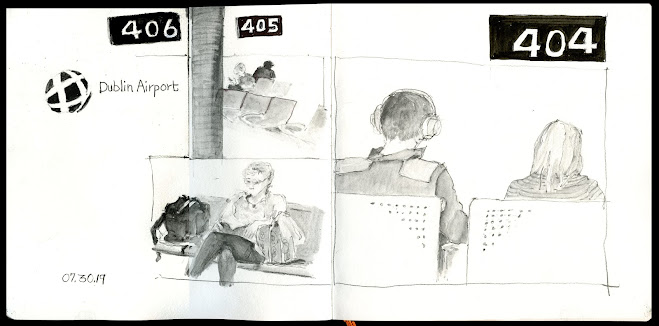
These sketches were done while waiting for my granddaughter at the allergist. I love to people watch!


What are the benefits of speed sketching?
  • Improved drawing skills
  • Focus
  • Increased spontaneity and freshness in your sketches
  • Rapid planning of ideas for larger sketches or future paintings
  • Great for fast travel sketching especially when traveling with non-sketchers.
  • They’re fun


Poetry of speed sketching –Capturing quick moments of the day and recording a response to them. 

I call them Tone Poems. 


Want to keep up to date by email? Fill in your email address in the place provided in the upper right corner under the banner. We look forward to hearing from you.


Thursday, September 9, 2021

T&T Thursday! The Big and Little Picture

Notice What You See

By Barbara Weeks


Fall is just around the bend. Have you noticed the leaves are slowly starting to change? Do you see anything else that tells you Fall is on its way? A yellow leaf in a puddle? A backpack ready for school?


As Urban Sketchers we sketch the world we live in and visit. We sketch from direct observation whether from our cars, our homes, outside or inside. We tend to sketch the “big picture.” Often there is a small something we notice that doesn’t show up in the main sketch or painting.


Artists whose works are reproduced as prints sometimes add a small hand-done sketch in the margin of the print. It’s called a remarqueIt makes the print unique. I like do that too! (Well sort of.) Sometimes I add my version of a remarque to the page, that little something that caught my eye.  


Try it! Add a small sketch, something that caught your eye. You'll be glad you did! When you look back on your sketchbook page you’ll smile at what you see (and remember!)


Try it and post your sketches to on Facebook !   I'd love to see what you noticed. #T&T

BTW: If you would like to polish your noticing skills I highly recommend The Art of Noticing  by Rob Walker. This isn’t an art instruction book. It’s a book that sparks creativity, vision, and fun. 


Thursday, July 22, 2021

T&T Thursday!


Last T&T Thursday Alex shared her journey to drawing excellence. Knowing how it can be done shows us the way. Knowing the benefits shows us the why!


No Excuses!

By Barbara Weeks


Did you know that until the late 1920s - early 1930s drawing was part of the regular school curriculum? While not one of the 3 Rs, it was considered an important tool for developing concepts, sharpening thought, and sharing ideas. 

What Happened? 

One of the major factors was the development of photography made drawing seem like an unnecessary skill. In more recent years, computer advancements in the visual communication field made drawing appear to be unimportant even unnecessary but things are changing. 


Why Draw?

Whether it’s called drawing, sketching, or doodling, today, we’re rediscovering there are real benefits to drawing. If you're an experienced artist looking to reboot or a newbie looking for kindred spirits, this is for you.

Benefits of Drawing
  • Improves eye-hand coordination
  • Improves memory
  • Improves communication skills
  • Relieves stress (Have you seen all the coloring books for grown-ups that are in the stores?)
  • Increases creativity
  • Increases observational skills
  • Increases attention to detail
  • Records ideas
  • Increases positive emotions (Why do you think restaurants give crayons an paper to children?)
  • The more you draw the better your drawing skill
  • It's fun
And this is just a partial list!


Drawing relieves stress, preserves a memory, and conveys ideas.


Want to Draw More but Need a Nudge? 

We know the benefits of drawing; it only makes sense to draw more. It’s funny that two of the causes for drawing less are now big helps to start drawing more – the computer and the internet. 
There’s an internet group out there made just for you and your sketching needs. FaceBook offers an almost endless list of groups that unite like-minded sketchers for encouragement, inspiration, to share information and sketches. There are drawing quests issued on Facebook and Instagram to challenge you to draw more. Post your work, add the proper # and join in the fun. 

Enjoy and share sketching online communities – Sketchbook Work, Urban Sketching, #EDM2015


On location sketching:


Sketchbook work:


Hashtags:

The challenges vary and crop up seasonally. Search these hashtags for ideas:
  • #inktober
  • #everydayinmay
  • #uskchicago
  • #doodlersanonymous
  • #usk


    Working for years as a graphic designer, I reached a point when I felt handcuffed by the computer and missed the creative boost of sketching by hand. That’s when I discovered Urban Sketchers (thank you Gabi Campanario!) and Everyday Matters (thank you, Danny Gregory). They were the beginning. There was no turning back! I found I didn’t need  an excuse to draw, I had reasons to draw. 


    How about you, why do you draw? Do you have a favorite group?


    Want to keep up to date by email? Fill in your email address in the place provided in the upper right corner under the banner. We look forward to hearing from you.

    Thursday, July 8, 2021

    T&T Thursday!

    Paka 2021
     

    Thoughts on Talent

    By Alex Zonis


    Many times, as I am sitting sketching in a park or a cafe, someone would stop by, look over my shoulder, and then say with a wistful air "I wish I had your talent… I'd like to draw too…"

    I usually hesitate to tell them, but I will tell you: I have no talent.

    What I have is an incessant desire to make images. I have persistence and tenacity. I gave up on instant gratification and the need to look good right away. I bought in on an idea of 10,000 hours. But talent… no, definitely not. But let's examine the situation with more attention.

    For decades I did not draw or paint or make art, because I was convinced that I had no "talent". Fairly late in life I came up with a rebellious idea that I don't actually need this thing "talent" to draw or paint. Ha! What a liberation it was! I took a pencil and did an exercise from a drawing book, the year was 2009:


    I did more exercises from books, and interestingly enough my drawings got better.


    Then I came across a book by Malcolm Gladwell "Outliers: The Story of Success" and read about 10,000 hours concept. 

    The idea is that you need about 10,000 hours of practice to get good at whatever you want to get good at. I did the math: working 8 hours a day, 5 days a week, gives 2,000 hours of practice in one year. In 2010 I'd barely scratched the surface… I realized that I needed 5 years of dedicated practice. I also realized that I don't need "talent", I need skill. That was doable, and I got to work.

    These are some examples. 

    2010


    2011


    2012


    2013


    2014


    I have done my 5 years - 10,000 hours and much more! I have moved from being afraid of putting a pencil to paper to being a professional artist and a painting instructor. 

    Here's one more thing to keep in mind. In the beginning of your 10,000 hours quantity is more important than quality. 
    There once was an experiment in a pottery class of an art school. For one semester a class was divided in 2 halves. Students in the first group were asked to make one single pot each during the time of that semester, but it should be the best pot they ever made. The grade would be given based on the quality of that single pot. The second group was asked to make as many pots as they possibly can, quality and beauty not important. These students would get their grades based on the number of pots they made, the more the better. As you probably guessed, by the end of the semester pots produced by the "quantity" group  were better and more beautiful than single pots made by the "quality" group. 

    This example comes from a book "Art & Fear: Observations On the Perils (and Rewards) of Artmaking" by David Bayles and Ted Orland. You can get this book from Amazon for under $4.00 used. It is a little book - 120 pages, small format - with a lot of wisdom. This will be the best art book you ever bought.

    A practical and observable shift in quality of work occurs through practice and work. "Talent" is not even a part of this equation.

    During my years of practice and self-study I arrived to several conclusions that I want to share with you:
    • If you can write a grocery list - you can draw too. You have all visual and motor skills that you need.
    • There is no such thing as talent. Talent is a man-made construct that is not really helpful.
    • Drawing can be taught. Why do you think there are so many art schools and art teachers. Find the right one. Teaching yourself works too.
    • Practice and time on task is all there is. Don't just trust me, try for yourself. Then come back in 6 months and thank me :).


    Want to keep up to date by email? Fill in your email address in the place provided in the upper right corner under the banner. We look forward to hearing from you.